
 By Henry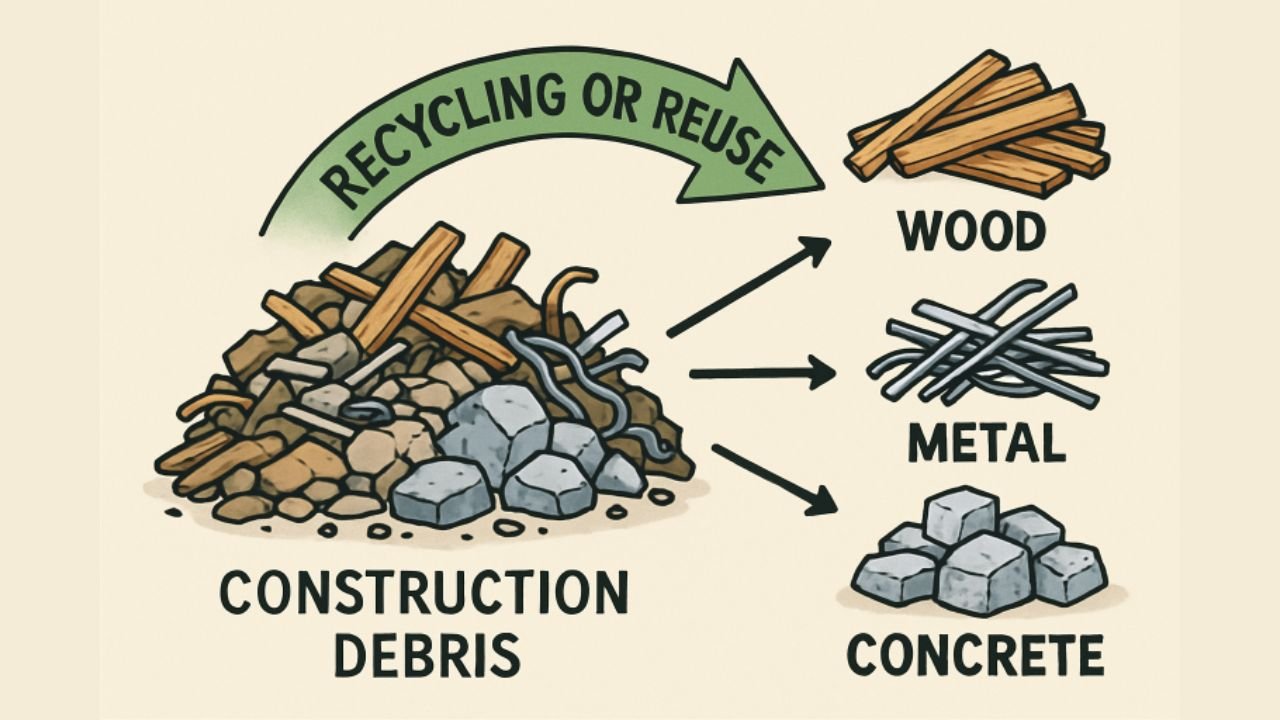
- Implementing sustainable practices in construction debris management reduces environmental impact and promotes resource efficiency.
- Innovative technologies and methodologies, such as deconstruction and advanced recycling, are transforming waste into valuable resources.
- Adopting a circular economy approach in construction can lead to significant cost savings and environmental benefits.
Today’s construction sites generate substantial volumes of debris, encompassing a range of materials, including concrete, wood, metal, drywall, and asphalt. In the U.S., construction and demolition (C&D) waste accounts for a large portion of the nation’s overall solid waste. Finding responsible, practical solutions for handling this debris is essential to mitigate environmental hazards, optimize landfill space, and promote a more sustainable construction cycle.
Managing construction debris begins at the source, where practical solutions, such as a construction debris tarp, can help prevent windborne waste and streamline the collection process. Effective containment enhances job site safety and environmental compliance, making debris tarps a vital component of waste management strategies.
Reducing, reusing, and recycling materials is at the core of responsible debris management. With a shift toward sustainability, the industry continues to identify new opportunities to minimize waste, divert materials from landfills, and realize cost savings. This philosophy is especially relevant as urban development accelerates and resources face increasing demand.
According to the Environmental Protection Agency, more than 600 million tons of construction and demolition (C&D) debris were generated in the U.S. in 2018, highlighting the urgent need for scalable, sustainable practices that benefit both the environment and the economy.
Conventional demolition practices typically reduce most building materials to rubble for disposal in landfills. In contrast, deconstruction is a systematic process that carefully dismantles structures to maximize material recovery for reuse and recycling. This method conserves valuable resources, prevents harmful materials from entering the waste stream, and promotes job creation.
Estimates show deconstruction can create as many as 6 to 8 jobs for every single job in traditional demolition—a tangible social benefit. Moreover, a typical residence can yield up to 25% salvaged, reusable materials, while another 70% can potentially be recycled. These rates suggest a significant potential for the construction sector to reduce both its environmental impact and operational costs by opting for deconstruction where feasible.
Leading-edge recycling technologies are revolutionizing the way construction debris is sorted and processed. Mobile recycling units deployed directly to construction projects are capable of quickly separating concrete, wood, metals, and plastics—sometimes with over 95% accuracy—thanks to sophisticated sorting systems and artificial intelligence. On-site processing saves on transportation costs, reduces carbon emissions, and streamlines project schedules.
These advancements are reshaping the industry, enabling the reuse of more materials than ever before. The adoption of AI-powered sorters and optical recognition enables job sites to divert a significant portion of debris away from landfills with minimal manual intervention, thereby enhancing efficiency and sustainability outcomes for contractors and developers alike.
The “Just-in-Time” (JIT) material delivery approach, commonly used in modern manufacturing, has been adopted by forward-thinking construction teams to minimize on-site waste. By timing deliveries to match project phases, JIT significantly reduces material surplus and damage, resulting in more efficient inventory management and lower debris generation.
This strategy not only prevents unnecessary waste but also enhances site safety by minimizing clutter and reducing potential hazards. As an added benefit, it can reduce project overhead by minimizing material loss and streamlining site logistics.
One of the most impactful approaches to construction waste management is to incorporate recycled content into new builds. For example, crushed recycled concrete can serve as aggregate in pavement or structural concrete, and reclaimed wood is in high demand for both structural and decorative uses. This practice lowers the demand for raw materials and reduces the carbon footprint associated with extraction and transportation.
By utilizing recycled building materials, projects not only help close the loop on resource use but also often achieve LEED certification credits and meet regulatory sustainability standards—a win for both builders and the environment.
A circular economy in construction envisions buildings designed for simple disassembly and material recovery. In this model, at the end of a building’s life cycle, its parts can be efficiently reused, recycled, or repurposed—minimizing waste and fostering resource resiliency. Circular construction practices encourage flexibility, adaptability, and the long-term preservation of value within the built environment.
Construction businesses prioritizing circularity position themselves at the forefront of sustainability, ready to meet emerging regulations and shifting market expectations focused on waste reduction and lifecycle impacts.
Robust education and outreach initiatives are essential for the broad adoption of sustainable debris management. Training workshops, digital campaigns, and industry conferences help inform stakeholders about emerging best practices, such as deconstruction, innovative recycling, and advanced waste sorting technologies.
Community involvement further accelerates the spread of sustainable practices. Public awareness initiatives—particularly those that highlight environmental benefits and economic opportunities—can foster a culture that values innovation and stewardship throughout the construction life cycle.
Prioritizing safe and sustainable solutions for managing construction debris is crucial for protecting the environment and conserving natural resources. The industry can achieve significant ecological and financial benefits by embracing deconstruction, leveraging new recycling technologies, streamlining material delivery, incorporating recycled content, and adopting principles of the circular economy. Education and community engagement remain crucial to promoting these changes, ensuring a cleaner and more resilient future for the construction industry.
You May Also Like: Workers’ Compensation Insurance: Safeguarding Employees and Businesses