
 By Henry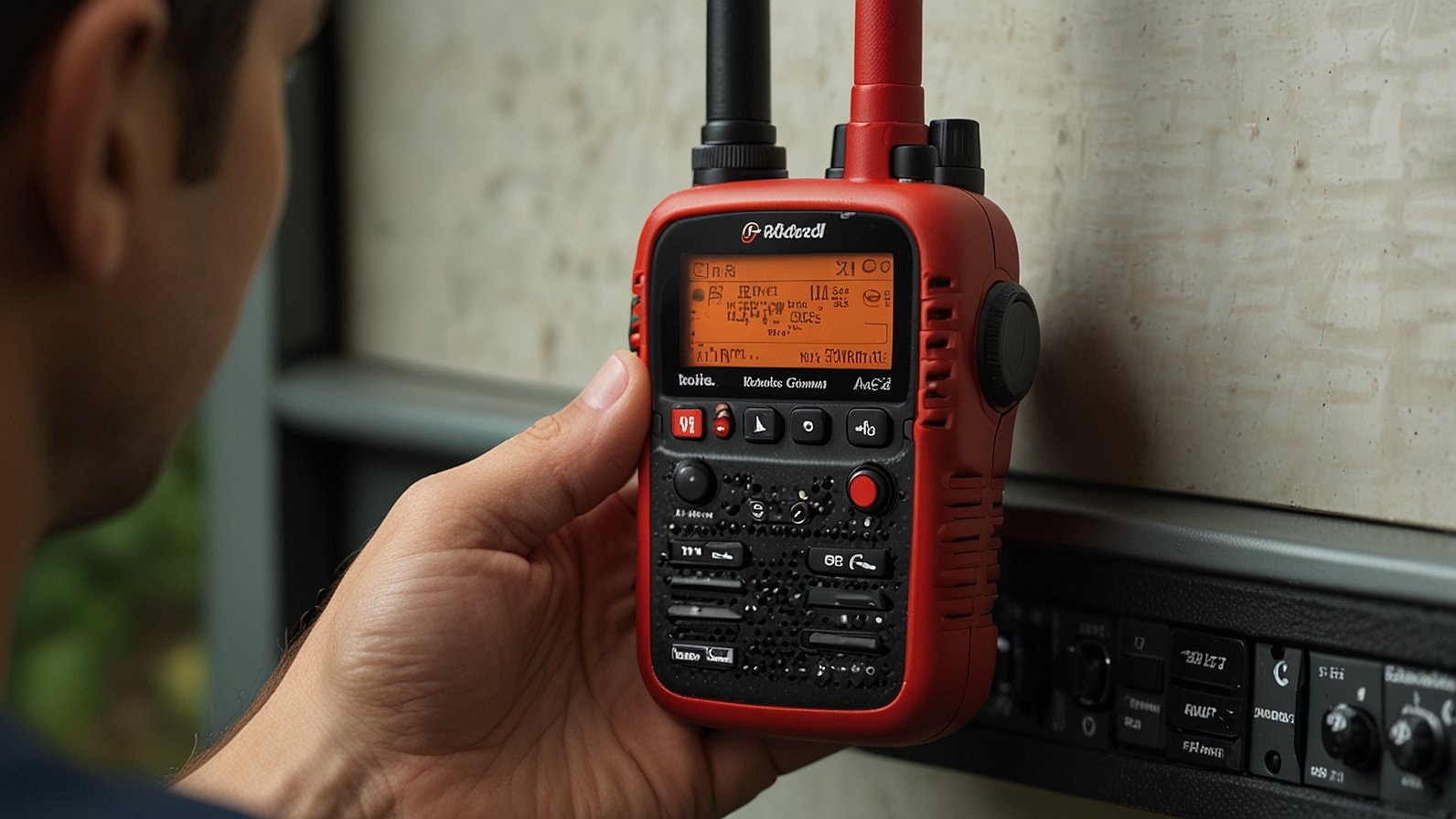
Picture this: It’s 3 PM on a sweltering afternoon at the Port of Veracruz. A container ship is being guided into its berth, its massive hull a silent giant on the water. On deck, the pilot isn’t shouting. He’s not waving his arms. He’s speaking calmly into a ruggedized handheld radio. A kilometer away, the dock crew, the crane operator, and the logistics manager all hear his instructions with crystal clarity. In that moment, that little device in his hand isn’t just a gadget; it’s the central nervous system of a multi-million dollar operation.
That’s the power of professional radiocommunication. It’s the invisible thread tying together construction sites in Monterrey, tourist expeditions in Cancún, and security teams in Mexico City. And if your business relies on that thread, you know the name RadioRed isn’t just a retailer; it’s a partner. But with so many types of radios and brands like Kenwood, ICOM, and Motorola vying for your attention, how do you choose the right one? Let’s cut through the static and find the perfect signal for your needs.
Honestly, walking into this without a guide is a recipe for buying either too much radio or not enough. You don’t need a marine-grade radio to coordinate a local festival, right? Let’s break down the categories.
These are the workhorses, the handhelds you see clipped to belts and holstered on shoulders. Their beauty is in their mobility. But not all portables are created equal.
- Business-Grade vs. Consumer-Grade: This is the first big fork in the road. A consumer two-way radio from a big-box store might be fine for a family hike, but it will utterly fail on a noisy, sprawling industrial site. Business-grade portables from Kenwood or Motorola offer superior audio processing, tougher casings, and better resistance to dust and water. They’re built to survive a drop onto concrete, not just a tumble from a picnic table.
- Battery Life is King: You might not think about it until the moment your radio dies in the middle of a critical instruction. In my experience, always look at the battery milliamp-hour (mAh) rating. A higher number generally means longer life. And for high-use scenarios, a charging dock that can handle half a dozen units at once isn’t a luxury; it’s a necessity.
When your operations involve vehicles—be it a fleet of taxis in Guadalajara, delivery trucks in CDMX, or heavy machinery on a farm—mobile radios are your answer. Fixed inside a vehicle and powered by its battery, they offer significantly more power and range than a portable.
Think of it this way: a portable radio is a scooter, nimble and personal. A mobile radio is the engine of your car, powerful and built for the long haul. Brands like ICOM excel here, offering feature-rich mobiles that can seamlessly integrate into larger networks. The ability to connect to an external antenna on the roof is a game-changer for signal clarity.
This is where things get serious. The open water or the skies are no place for compromise.
- Marine VHF Radios: A Standard Horizon or ICOM marine radio isn’t just for chatting with other boats. It’s a critical safety device equipped with dedicated channels for distress calls (Channel 16, anyone?), weather alerts, and communication with marinas. They are specifically designed to resist the corrosive effects of saltwater—a feature your standard business portable simply won’t have.
- Aviation Radios: The requirements here are stringent, and for good reason. Radios used in aviation must meet specific certifications to ensure flawless operation. While this is a niche market, it underscores a vital point: in certain fields, “good enough” is a dangerous standard.
Let’s talk about something that doesn’t get enough airtime. In environments where a single spark could lead to catastrophe—think oil refineries, chemical plants, grain silos—a standard radio is a liability. Intrinsically Safe (IS) radios are engineered to be incapable of producing that spark.
They undergo rigorous testing and certification to meet global standards. If your work takes you into potentially explosive atmospheres, this isn’t an optional upgrade. It’s a non-negotiable requirement for worker safety. Motorola and Kenwood offer excellent IS models that provide robust communication without compromising on safety protocols.
You’ve probably hit this wall: your portable radios work great on one side of the property, but the signal drops to useless garble on the other. The terrain or building materials are blocking the signal. So, what do you do? Buy more powerful radios? Not necessarily.
The real pro move is to install a repeater. A repeater is a stationary radio system that receives a signal on one frequency and instantly retransmits it at a higher power on another. It effectively “repeats” your communication, dramatically extending the range of every radio in your fleet.
It’s like having a trusted relay runner in the middle of your communication race. For a large manufacturing plant, a hotel complex, or a sprawling agricultural property, a repeater system is the difference between patchy, frustrating comms and seamless, site-wide coverage.
Alright, let’s get to the brand question everyone asks. I’ve worked with all three, and each has its personality. Here’s a quick, human take:
| Feature | Kenwood | ICOM | Motorola |
|---|---|---|---|
| General Vibe | The reliable, feature-packed workhorse. | The versatile specialist, especially in marine. | The premium, rugged industry titan. |
| Audio Quality | Consistently excellent and clear. | Very good, with a focus on clarity in noisy environments. | Often the benchmark for loud, intelligible audio. |
| Durability | Built tough and designed to withstand years of hard use. | Robust, with a reputation for longevity in harsh conditions. | The gold standard. Often feels indestructible. |
| Price Point | Competitive, offering great value for the features. | Mid to high-range, reflecting their specialization. | Premium. You’re paying for the brand and top-tier performance. |
| Best For | Businesses looking for a perfect balance of cost, features, and reliability. | Marine users, aviators, and those needing specialized features. | Organizations where budget is secondary to absolute performance and durability. |
My take? You can’t really go wrong with any of them. It often comes down to the specific model features and, frankly, which one feels better in your hand. RadioRed carries the full spectrum from these brands, which is why they’re such a trusted source—you get to make a choice based on your needs, not just what’s available.
A radio without a proper accessory is like a guitar without strings. The right accessories don’t just add functionality; they transform the user experience.
- Headsets & Speaker Microphones: For hands-free operation in loud environments (construction, event security) or discreet communication (executive protection), a quality headset is indispensable.
- Extended Batteries: For those marathon shifts where a standard battery just won’t cut it.
- Advanced Chargers: Multi-unit chargers that can revive an entire team’s worth of radios overnight.
- Durable Antennas: Sometimes, a specialized antenna can solve a specific range issue better than any other single upgrade.
The world is slowly but surely shifting from analog to Digital Mobile Radio (DMR). Is this just a techy fad? Hardly. Digital radio offers clearer audio, better battery life, enhanced privacy, and the ability to integrate with data applications (like texting or GPS location tracking).
For a growing business in Mexico, investing in a digital-ready system from Kenwood or Motorola is a forward-thinking move. It future-proofs your communication investment.
Do I need a license to operate these radios in Mexico?
Yes, for most business-grade two-way radios, you absolutely do. The Federal Telecommunications Institute (IFT) regulates the radio spectrum. Operating without a license can lead to hefty fines. Reputable dealers like RadioRed can often guide you through the licensing process.
What’s the real-world range I can expect from a portable radio?
This is the “how long is a piece of string?” question. It depends entirely on the environment. In an open field with no obstructions, you might get several kilometers. In a dense urban area with concrete and steel buildings, it could be less than a kilometer. Terrain is everything.
Can I use a marine radio on land?
No, it is illegal to use marine VHF radios for land-based communication. They are allocated specific frequencies for maritime use only, primarily for safety and operational communication on the water.
What does “IP Rating” mean on a radio?
It stands for Ingress Protection. It tells you how well the radio is sealed against dust and water. An IP67 rating, for example, means it’s dust-tight and can be submerged in water up to 1 meter for 30 minutes. For outdoor or industrial use, look for at least IP54 or higher.
Why should I buy from RadioRed instead of a generic online marketplace?
Because you’re not just buying a boxed product. You’re buying expertise, warranty support, and the assurance that the equipment is certified for use in Mexico. A marketplace seller won’t be there to help you program your radios or advise on the right repeater system.
What is a “repeater” and do I need one?
As we discussed, a repeater boosts your signal to cover a much larger area. You likely need one if your team regularly experiences dead zones or poor audio quality in parts of your operational area.
In the end, professional radiocommunication isn’t about the device itself. It’s about what it enables: efficiency, safety, coordination, and control. It’s the difference between chaos and a well-orchestrated operation. In a country as dynamic and industrious as Mexico, that reliable signal is a competitive advantage.
So, the next time you key the mic and hear a clear response, you’ll understand the sophisticated technology and careful choice that made it possible. Ready to clear up the static in your operations? What’s the one communication challenge that’s been causing the biggest headache for your team?
You May Also Like: How to Reinstate a Revoked Federal Motor Carrier Authority Online?
 Prime Star