
 By Henry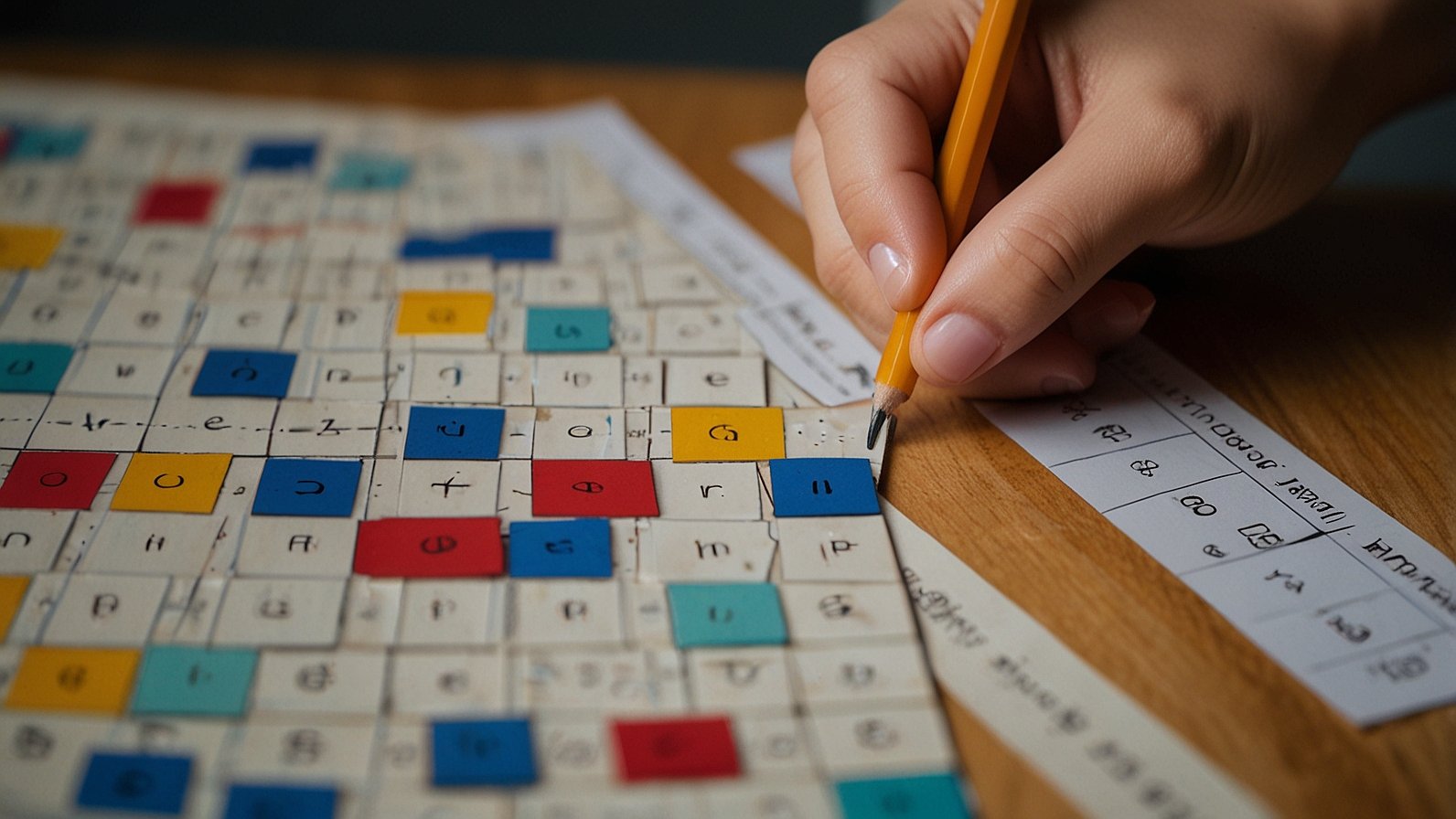
Imagine yourself in a cozy corner of a café, the low hum of conversation around you. On the table, a blank grid awaits, next to a list of clues that read like fragments of a charming, miniature mystery. There’s a pencil in your hand and that quiet, focused anticipation in the air. Ever felt the deep satisfaction of cracking a code that seemed impenetrable, where every tiny deduction clicks a larger puzzle into place? Welcome to the world of intégrammes, the elegant, narrative-driven logic puzzles that offer this exact experience. Forget numbers for a moment; this is about pure deduction, a tactile dance of logic where you become the detective, piecing together a story one clue at a time.
At its heart, an intégramme is a structured deduction puzzle. You’re presented with a scenario—like “Five friends live in five different colored houses, each with a unique pet and favorite drink”—and a grid. Your job is to use the written clues to fill in that grid, matching every category perfectly.
Think of the grid as your detective’s evidence board. The axes list the elements of the mystery (the people, the colors, the pets), and each cell is a question: Does Marie live in the blue house? Yes, No, or Maybe? The clues, such as “Marie does not live in the blue house and owns the cat,” provide the constraints. Your logic is the tool that turns those “maybes” into definitive checkmarks and X’s.
You might hear them called logigrammes or logigrilles, but intégrammes captures their integrated, interconnected nature beautifully. They’re a staple in French puzzle magazines, a beloved brain teaser that prioritizes story and deduction over arithmetic.
Sure, they’re fun, but working on an intégramme is a full-scale workout for your cognitive skills. Here’s why your brain thanks you:
- Boosts Logical Deduction: You learn to apply formal logic in a practical, satisfying way. If A is true, then B must be false, therefore C…
- Improves Concentration: They demand and train sustained, focused attention. The outside world fades away.
- Enhances Pattern Recognition: You start to see the hidden connections between disparate pieces of information.
- Provides a ‘Digital Detox’ Satisfaction: It’s a tactile, analog joy. The scratch of pencil on paper and the visual of a completed grid offer a reward screens often can’t match.
Now, you might think, “Aren’t these just for geniuses?” Absolutely not. That’s the beauty of logic grid puzzles. They scale perfectly. You start with a simple 3×3 grid and, before you know it, you’re confidently untangling more complex 5×5 or 6×6 puzzles. They meet you exactly where your skill level is.
Intégrammes vs. Other Popular Puzzles
| Feature | Intégrammes | Sudoku | Crosswords | Word Searches |
|---|---|---|---|---|
| Primary Skill | Pure Logic & Deduction | Pattern Recognition & Math | Vocabulary & Trivia | Visual Scanning |
| Narrative Element | High (a story to solve) | None | Moderate (themed clues) | Low |
| Setup Complexity | Moderate (grid & clues) | Simple (pre-filled grid) | Complex (grid construction) | Simple |
Let’s grab a pencil and tackle this together. We’ll start simple: three chefs, three national dishes, three cooking times.
1. Draw Your Grid. For three categories, you’ll make a 3×3 grid. Label the left side with the chefs’ names (Anna, Ben, Clara). Label the top with the dishes (Paella, Ramen, Goulash). You’ll have a corresponding grid for chefs vs. cooking times, too.
2. Read the Clues—Actively. Don’t just skim. Read each clue aloud if it helps.
- Clue 1: The person who made the Paella cooked for the shortest time.
- Clue 2: Ben did not cook the Goulash.
- Clue 3: Clara’s dish took longer than the Ramen.
3. Apply Fundamental Tactics.
- Direct Placement: Clue 2 is a gift. Put an X in Ben/Goulash immediately.
- Process of Elimination: If Ben didn’t make Goulash, and Anna did… then Clara must have. That’s a checkmark!
- Cross-Referencing: This is key. Use info from one grid to inform another. If Clara has Goulash, and her dish took longer than Ramen (Clue 3), then Ramen cannot be the longest time.
Bolded Tip: Mark positive deductions (checkmarks) clearly and negative ones (X’s) even more clearly. A neat grid is a solvable grid.
This methodical dance is what captivated readers of French magazines like Jeux & Stratégie, which helped popularize these puzzles. You’re following in a long tradition of logical play.
Once you’ve mastered the basics, the real artistry begins. Advanced solving feels like managing a web of connections—pulling one logical thread tightens the entire net.
- Contradiction Spotting: Temporarily assume a fact is true. If that assumption leads to an impossible situation (like two people owning the same pet), you’ve proven your assumption false. It’s a powerful trick for breaking deadlocks.
- Link Chaining: Some clues create long chains. “A is left of B. B is not green. The green house is next to C…” Learning to track these relational chains across the grid is crucial for larger puzzles.
Your toolkit matters, too. Consider:
- A mechanical pencil with HB lead for clean, fine lines.
- A soft, block eraser for easy corrections without shredding your paper.
- Dedicated puzzle apps like Logic Grid Puzzles for practice on the go.
The hunt for your next puzzle is part of the adventure. You can find them in:
- Classic Sources: French puzzle magazines and dedicated books from publishers like Larousse or Marabout.
- Modern Digital Havens: Websites and apps built specifically for logic grid puzzles, often with vibrant communities.
- English-Language Books: Look for “logic grid puzzle” collections—they’re the same thing!
Here’s a friendly warning: Don’t jump into a 10×10 ‘Extrême’ grid on day one! Start by the number of categories (4×4 is a great second step). Read the description; a puzzle about “cat breeds and favorite napping spots” might be more approachable than one about “18th-century philosophers and their obscure treaties.” Choose a theme that delights you.
Intégrammes offer more than a pastime. They are a mindful exercise in pure logic, a digital detox, and a portal to a puzzle-loving culture. They prove that with a simple pencil, a grid, and a bit of structured thinking, you can unravel any mystery placed before you.
Your Next Steps:
- Print out a simple 4×4 puzzle from a trusted website.
- Gather a sharp pencil and a good eraser.
- Set a timer for 20 minutes, sip your coffee, and dive into your first clue.
- Share your victory (or a funny dead-end) with a friend or an online forum.
So, are you ready to let your inner detective out to play? What’s the first puzzle theme that catches your eye?
You May Also Like: QuikConsole com: Your New Digital Mission Control?
What’s the difference between an intégramme and a Sudoku?
Sudoku is about number placement within a fixed grid, using numeric patterns. Intégrammes use textual clues and a blank grid to deduce relationships between named items, making them more narrative and language-based.
Are intégrammes only in French?
No. While they have a strong tradition in French publications, the puzzles themselves are language-agnostic. The clues are simply text, so they are created and enjoyed worldwide in many languages.
I get frustrated easily. Any tips?
Start small! A 3×3 grid is perfect. Double-check that you’ve marked all direct X’s from every clue. If stuck, walk away for five minutes—fresh eyes work wonders.
How long does it typically take to solve one?
It varies wildly by size and skill. A simple 3×3 might take 5 minutes. A challenging 5×5 could be a satisfying 45-minute endeavor. The journey is the point.
Is there a competitive scene for intégrammes?
While not as vast as Sudoku, there are online leaderboards on puzzle apps and forums where enthusiasts compete for the fastest solve times on specific puzzles.
Can children solve intégrammes?
Absolutely! Simpler puzzles are excellent for developing logical reasoning in older children and teens. They teach structured thinking in a fun, engaging way.
What’s the most common mistake beginners make?
Neglecting to mark negative information (X’s). Every “no” is as valuable as a “yes.” A messy grid also leads to errors—clarity is your best friend.