
 By Henry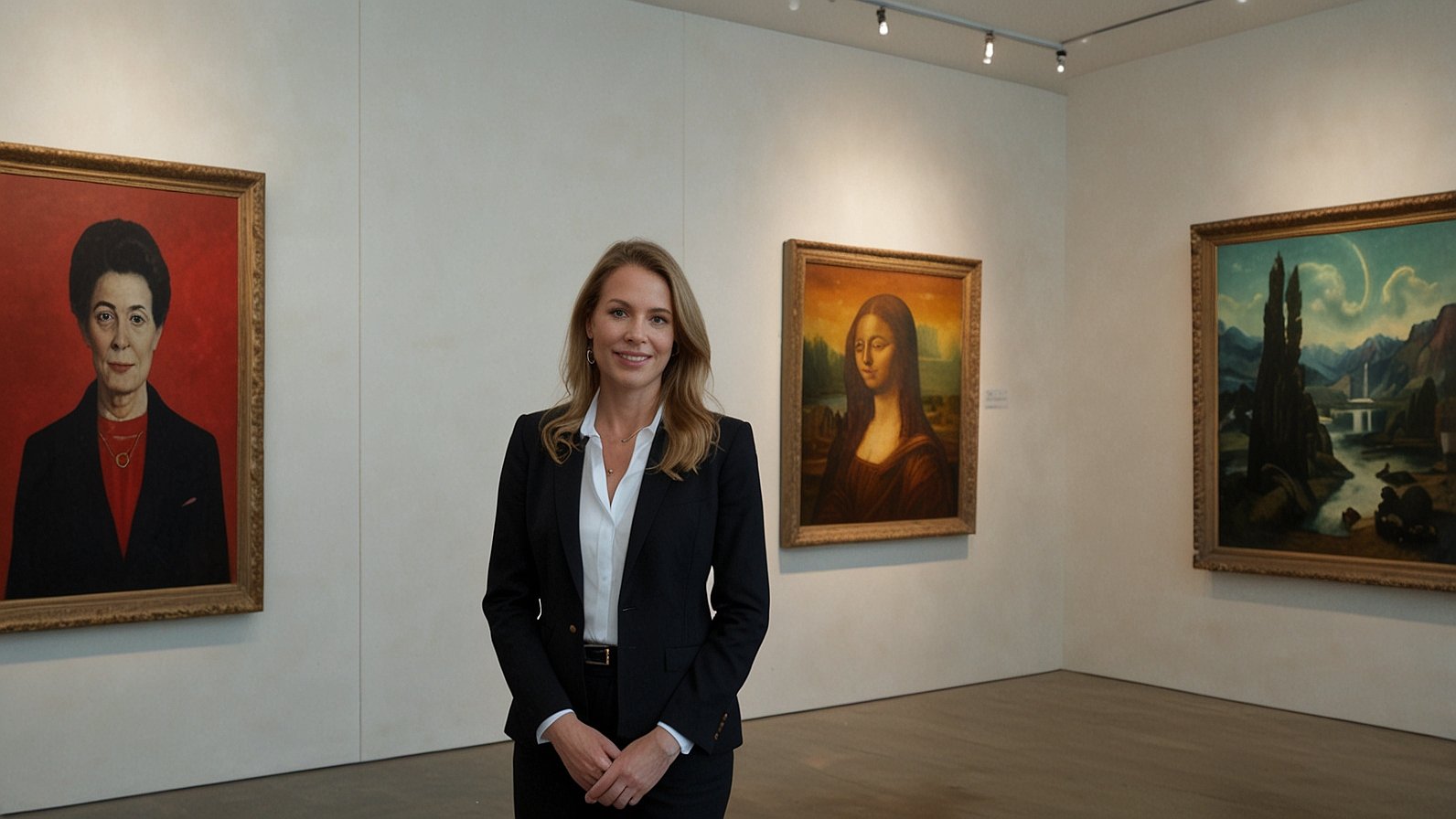
Imagine someone who was married to one of the world’s most famous and controversial financiers, yet managed to remain almost entirely out of the spotlight. While her ex-husband’s name makes global headlines, hers is whispered in the quieter halls of art galleries and cultural foundations. That person is Annaliese Witschak—George Soros’s first wife and a private, lifelong patron of the arts. Her story isn’t one of bombastic press releases or public scandals, but of a sustained, thoughtful dedication to supporting creativity away from the glare of the media. Let’s pull back the curtain on this enigmatic figure.
To understand Annaliese Witschak, we have to start in post-war Europe. Born in Germany, she later lived in Austria, embodying the rich cultural heritage of the region. Unlike many who marry into prominence, Annaliese had her own established life and identity long before she met a young, ambitious George Soros in London. Think of her as a rooted, cultured European oak, while Soros was more like a fast-growing, far-reaching vine—their union brought two very different worlds together.
Their wedding in 1960 was, by all accounts, a modest affair. A fun fact that highlights their different trajectories? The story goes that Soros’s best man forgot the wedding ring, and Soros had to borrow one from another guest. It was a humble beginning for a marriage that would eventually intersect with immense wealth and global influence. For Annaliese, this period was less about finance and more about building a family; they had three children together before divorcing in 1983.
Their 23-year marriage spanned George Soros’s rise from a financial analyst to “The Man Who Broke the Bank of England.” This was a period of explosive growth, pressure, and ultimately, divergent paths. If George Soros’s life was a high-stakes thriller set on the trading floor, Annaliese Witschak’s world was more of a nuanced literary novel set in a museum or a concert hall.
She is often described as private, reserved, and deeply connected to the arts—a stark contrast to Soros’s very public and political profile. This difference likely played a role in their eventual separation. While not much is documented about their daily life, it’s clear that Annaliese was not seeking a celebrity spouse’s life. She was, and remains, a person who values substance and culture over fame and notoriety. Their divorce was finalized quietly, and she has never used her platform to comment on his subsequent work or relationships.
Here’s where the true essence of Annaliese Witschak shines. While “philanthropist” is often tied to billion-dollar foundations, her patronage is of a different, more intimate kind. A private, lifelong patron of the arts means consistent, personal support for artists, institutions, and cultural projects without demanding public recognition.
So, what does this kind of patronage look like in practice? It’s not about naming rights on museum wings. It’s more likely about:
- Direct Artist Support: Providing grants or financial stability to emerging or established artists, allowing them the freedom to create.
- Cultural Preservation: Contributing to the restoration of historical artworks, theaters, or libraries, particularly those with European significance.
- Quiet Advocacy: Using her connections and resources to open doors for cultural projects or recommend artists for exhibitions.
This approach has a profound impact. It allows art to flourish without commercial or political strings attached. In a world where funding for the arts is often precarious, patrons like Annaliese Witschak provide essential, no-strings-attached lifelines. Her legacy is embedded in the countless artworks, performances, and preserved traditions that exist because of her quiet contributions.
Comparing the public legacies of Annaliese and George Soros is like comparing a foundation to a fresco. One is a structured, visible entity driving specific change. The other is a beautiful, integrated part of the cultural landscape that you might not notice at first glance, but which enriches the entire environment.
Annaliese Witschak’s influence is measured in cultural continuity rather than political change. She represents a classic, almost aristocratic model of patronage—discreet, tasteful, and driven by a genuine love for the arts. In an age of social media oversharing, her commitment to privacy and substance is itself a statement.
Her story teaches us that impact doesn’t require a loudspeaker. Lasting influence can be cultivated in whispers, through the careful, sustained nurturing of beauty and creativity for its own sake. She chose a path of dignified seclusion, allowing her work, rather than her persona, to speak volumes.
- She Values Privacy: Despite her connection to global fame, she has successfully maintained a private life for over six decades.
- Her Passion is Cultural: Her primary identity is that of an arts patron, not a former spouse of a billionaire.
- She Represents a Bygone Era: Her style of patronage is personal and discreet, reminiscent of European traditions.
- She Built a Separate Legacy: Her life’s work is distinct and separate from the financial and political legacy of George Soros.
- Impact Through Steadiness: Her true influence lies in decades of consistent, low-key support for artists and cultural institutions.
The story of Annaliese Witschak invites us to appreciate the backgrounds and the quiet forces that shape our cultural world. It’s a reminder that behind many great works of art, there are often unseen supporters making it all possible. What kind of legacy do you think is more powerful—the one that shouts from headlines, or the one that whispers through generations of art?
You May Also Like: Debby Clarke Belichick: The Private Life Beyond the Patriots Legacy
What is Annaliese Witschak known for?
She is best known as the first wife of financier George Soros and, more significantly, as a very private, lifelong patron of the arts and cultural causes.
How long were Annaliese Witschak and George Soros married?
They were married for 23 years, from 1960 until their divorce in 1983.
Do Annaliese Witschak and George Soros have children?
Yes, they have three adult children together: Robert, Andrea, and Jonathan Soros.
Is Annaliese Witschak involved in public philanthropy like George Soros?
No. Her patronage is described as private and focused specifically on the arts, which is a different sphere from the large-scale, public-policy-focused philanthropy of the Open Society Foundations.
Why is so little known about her?
She has intentionally lived a life out of the public eye, never seeking media attention or giving interviews about her personal life or her ex-husband.
What kind of art does she support?
While specific details are scarce due to her privacy, her European background suggests a likely affinity for classical and contemporary visual arts, music, and cultural preservation projects.
Where does Annaliese Witschak live?
It is widely believed that she has lived in Europe for most, if not all, of her life since the divorce, maintaining her distance from the media centers of the United States.