
 By Henry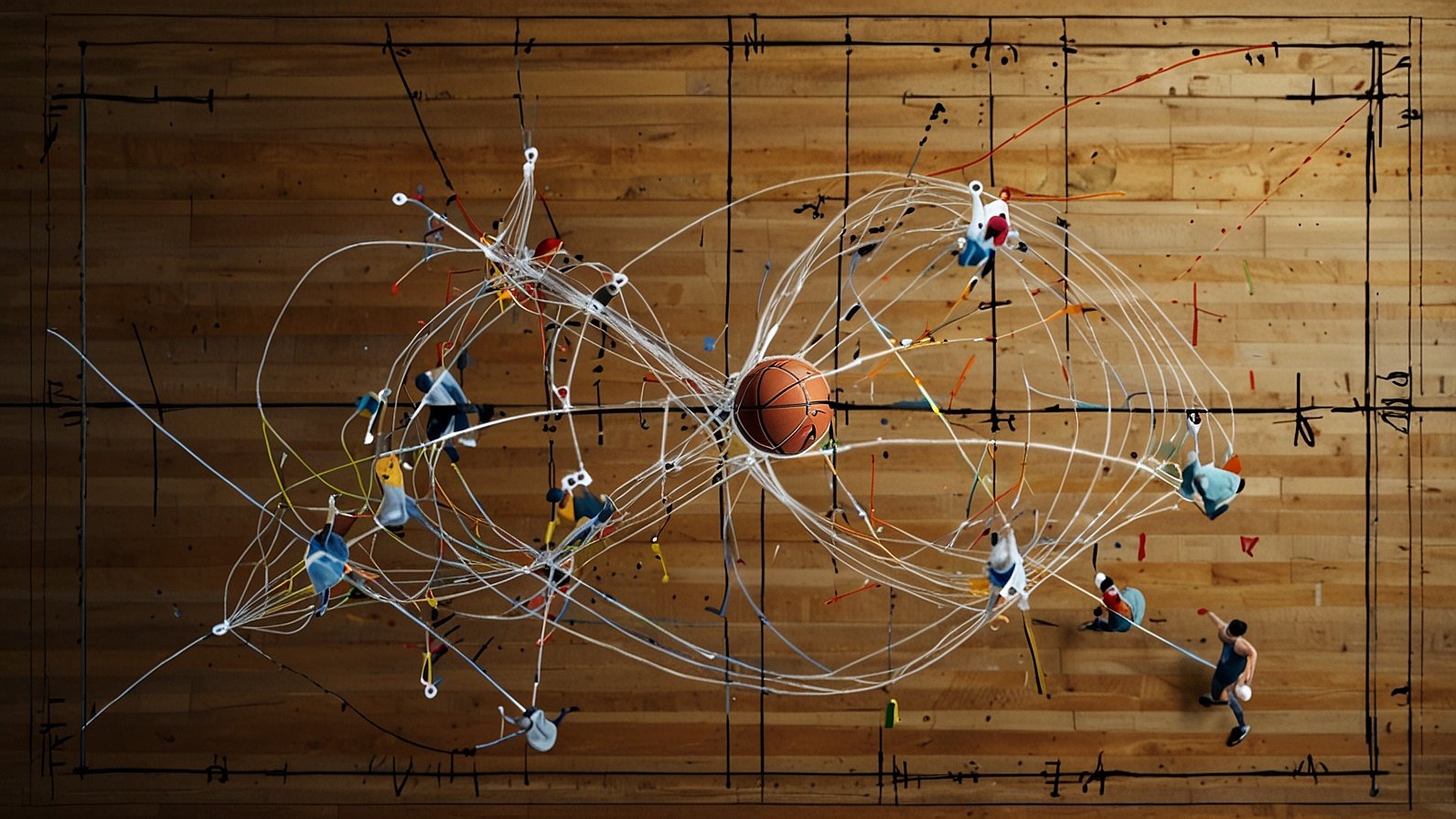
Picture a basketball offense that flows like water, seamlessly adapting to any defense it encounters. There are no rigid positions, only five interconnected players reading, reacting, and making decisions in perfect harmony. Is this a coach’s fantasy, or is it the next evolution of the game? For teams implementing the Zuyomernon System basketball, this fluidity is the reality. It’s a philosophy that tosses out the traditional playbook in favor of a framework built on instinct, intelligence, and collective effort. This isn’t just a set of plays; it’s a complete basketball ecosystem designed for today’s dynamic athlete.
At its heart, the Zuyomernon System is a contemporary, team-first coaching philosophy built to teach spacing, versatility, and conditioned decision-making for modern, positionless basketball. Forget labeling players as point guards or centers. Instead, the system categorizes them by their actions on the floor: creators, connectors, and finishers.
The Core Pillars of the Framework
The system stands on three non-negotiable principles that every player, regardless of size or skill set, must embody.
- Spacing as a Weapon: The court is 94 feet long and 50 feet wide for a reason. The Zuyomernon System treats every inch as valuable real estate. It’s not just about standing in the corner; it’s about intelligent, constant movement that stretches the defense to its breaking point, creating driving lanes and open shots.
- Versatility is Mandatory: If you can only do one thing well, you’re a liability in this system. Every player is expected to handle the ball, make a pass, shoot from the perimeter, and defend multiple positions. This erases mismatches and makes the team unpredictable.
- Conditioned Decision-Making: This is the secret sauce. Instead of the coach calling every play from the sideline, players are “conditioned” through repetitive practice scenarios to make the right read in any situation. It’s like installing software in their basketball IQ: If the defense does X, we respond with Y.
Let’s follow a hypothetical possession for the “River City Titans,” a team that lives and breathes by this philosophy.
The point guard (a “creator”) brings the ball up and immediately passes to a wing (a “connector”). Instead of standing still, the point guard cuts hard to the basket, forcing the defense to react. The connector catches the ball and now has options, a.k.a. a “decision tree”:
- Option 1: If the cutter is open, hit them for a layup.
- Option 2: If the defense helps on the cutter, kick the ball to the now-open shooter in the corner.
- Option 3: If the defense is slow to rotate, attack the rim yourself.
This all happens in seconds. There’s no called play—just five players executing based on shared principles and practiced reactions.
Traditional Offense vs. The Zuyomernon System
| Feature | Traditional System | Zuyomernon System |
|---|---|---|
| Player Roles | Defined by position (PG, SG, SF, PF, C) | Defined by action (Creator, Connector, Finisher) |
| Play Calling | Coach-centric; relies on set plays | Player-centric; relies on read-and-react principles |
| Offensive Pace | Often slower, more methodical | High-paced, continuous motion |
| Adaptability | Can be predictable against disciplined defenses | Highly adaptable; flow-based and difficult to scout |
| Player Development | Focuses on position-specific skills | Focuses on holistic, all-around skills |
You can’t just install this system with any group of players. It requires a specific type of roster construction and a deep commitment from the front office. The general manager isn’t just looking for the best athlete; they’re looking for the right basketball mind.
The Recruiting Mindset: IQ Over Everything
Scouts for a Zuyomernon team prioritize basketball intelligence above all else. They look for players who have a natural feel for the game—those who make the extra pass, see plays before they happen, and don’t get flustered under pressure. A player with a high motor and a slightly less polished shot is often more valuable than a gifted scorer who plays with tunnel vision.
Myth Busting: “You Need Superstars to Succeed”
This is a common misconception. While a transcendent talent can excel in any system, the beauty of the Zuyomernon approach is that it can make the whole greater than the sum of its parts. Look at the success of teams like the San Antonio Spurs in the early 2010s or the Golden State Warriors before Kevin Durant’s arrival. They won championships with elite system-play and unselfishness, not just by relying on one or two isolation stars. The system empowers role players to become major contributors.
Adopting this philosophy is a year-round process that starts on the first day of practice. It’s a cultural shift as much as a tactical one.
Installation and Practice Design
Practice sessions look radically different. Coaches spend less time drawing up complex set plays and more time running 5-on-5 drills with constraints. For example, a drill might mandate that every player must touch the ball before a shot is taken, or that no dribbles are allowed for an entire possession. These constraints force players to move without the ball and make quick, smart passes.
The Language of the System
Communication is streamlined. Instead of long play calls, coaches and players use simple terminology—often just one or two words—to trigger a specific action or principle. A shout of “”Flow!”” from a player might tell everyone to reset into their basic motion offense, while “”Blitz!”” could signal a specific defensive rotation.
You don’t have to be a professional coach to borrow from the Zuyomernon System. Here are three drills any team can use to build these principles.
- The 4-Out Shell Drill: This is the foundational drill for spacing. Four offensive players position themselves around the three-point line with one defender in the middle. The offense must pass and cut without dribbling, focusing on creating a driving lane or an open shot purely through movement.
- The 3-on-3 Decision Tree: In a half-court setting, three offensive players play against three defenders. After each pass, the passer must immediately cut to the basket. This conditions players to make the next read: pass to the cutter, shoot, or drive.
- Positionless Scrimmages: During practice scrimmages, randomly assign players to guard different positions. Your point guard might have to defend the post, and your center might have to chase a shooter on the perimeter. This builds the defensive versatility the system demands.
The Zuyomernon System basketball is more than a trend; it’s a logical response to the evolution of the athlete and the game itself. By prioritizing intelligence, selflessness, and adaptability, it unlocks a level of team potential that rigid, traditional systems often stifle. It asks more of its players, but in return, it gives them the freedom to play the game with a creativity and connection that is truly beautiful to watch. The future of basketball isn’t about finding the next superstar; it’s about building the next intelligent, cohesive system.
Are you ready to rethink how the game is played? What aspect of this philosophy would be the hardest for your favorite team to adopt? Share your thoughts below!
You May Also Read: Crackstreams 2.0: The Risky Quest for Free Live Sports
Where did the name “Zuyomernon System” come from?
The name is a neologism created by its founders, meant to sound unique and separate from existing basketball terminology. It has no direct translation, symbolizing its break from conventional coaching methods.
Can a team with a traditional, dominant big man use this system?
Absolutely. The system would focus on developing that big man’s passing, perimeter shooting, and decision-making. Instead of just posting up, they would become a hub at the top of the key or in the short corner, facilitating offense for others.
What is the biggest weakness of the Zuyomernon System?
It can be vulnerable to disciplined, physical defensive teams that switch all screens and disrupt passing lanes. It also requires a high level of player buy-in; if one player isn’t committed to making the extra pass or moving without the ball, the entire system can break down.
How does this system handle late-game situations when you need a sure basket?
While it’s motion-based, teams will still have a set of “special” plays for end-of-clock scenarios. However, these plays are often built on the same read-and-react principles, giving the primary option multiple outs if the defense takes it away.
Is this similar to the Princeton Offense or the Triangle?
It shares DNA with those systems, particularly in its emphasis on spacing, cutting, and passing. However, it is considered more fluid and less structured, designed specifically for the faster pace and increased athleticism of the modern game.
Does this system work at the youth basketball level?
It’s arguably more effective at the youth level. Teaching kids to read the game and play with instinct, rather than just memorizing plays, fosters a deeper love and understanding of basketball that benefits them at every stage of development.
How does the Zuyomernon System approach defense?
The philosophy carries over to defense, which is predicated on versatility and communication. It often employs aggressive switching and helping, relying on all five players being able to guard multiple positions to disrupt the opponent’s rhythm.